
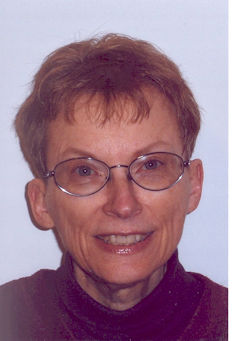
 An exceptional library media specialist and role model for more than 50 years, Helen Adams distinguished herself as a powerful intellectual freedom advocate, particularly for children and youth. Her career began as a school district reading instructor and by 1973, she was a school librarian, retiring in 2004 from Rosholt School District (Wisconsin) as District Library Media Director and Technology Coordinator.
During those years, Helen’s Wisconsin leadership was evident. She served on the Wisconsin Library Association Executive Board, 1984-85, and in 1985 she served as president of the Wisconsin School Library Media Association, a division of WLA. Helen received the Special Service award from the Wisconsin Educational Media Association (WEMA) in 1986 as well as its Award of Excellence in 1993. She also served as WEMA president 1996–1998.
Under her leadership, the library media program in Rosholt was recognized to be among the best, and Helen gladly shared her expertise in Wisconsin and beyond. Helen participated in Department of Public Instruction (DPI) library division activities including conference presentations, long range planning development, and WISCAT (statewide union catalog of library holdings) contributions. She provided in-service programs for CESAs (Cooperative Educational Service Agencies) serving numerous school districts as well as workshops/presentations for Wisconsin Public Library Systems. She also taught adjunct graduate courses in automation, technology, and policy development at UW Stevens Point and UW Stout. After retiring, Helen continued to teach online graduate courses focusing on legal and ethical school library issues for Drexel University (2005), Mansfield (PA) University (2005-2015) and continues to teach one course per year for Antioch University-Seattle (2016-).
In addition to conference presentations at state and national levels, Helen published books and journal articles. She co-authored Privacy in the 21st Century: Issues for Public, School, and Academic Libraries (Libraries Unlimited, 2005) with (fellow Hall of Fame inductee) Bob Bocher, Carol Gordon and Elizabeth Barry-Kessler. She also wrote three books including School Media Policy Development: A Practical Process for Small Districts (Libraries Unlimited, 1986), Ensuring Intellectual Freedom and Access to Information in the School Library Media Program (Libraries Unlimited, 2008) and Protecting Intellectual Freedom and Privacy in Your School Library (Libraries Unlimited, 2013).
Helen distinguished herself at the national level as well. She served on the Board of the American Association of School Librarians (AASL) at various times between 1990 – 2003, and was AASL President 2001 – 2002. In addition to volunteer work in AASL, she served as a trustee of the Freedom to Read Foundation (2011-2015) and multiple terms on the American Library Association’s Intellectual Freedom Committee, most recently serving as chairperson in 2017-2018.
Writing, teaching, and volunteering continue to be a large part of Helen’s life.
Helen was born and raised in Wisconsin. She received a bachelor’s degree in English/Art from UW – Oshkosh in 1966. She received a master’s degree in Library Science from Western Michigan University in 1971, and a master’s degree in media technology from UW – Stout in 1981. Post-graduate work was completed at UW – Stout, UW – Eau Claire, and UW – Stevens Point. Helen was inducted into Beta Phi Mu, the international library science honor society, in 1971.
Helen is an outstanding role model and mentor. She has been a dedicated intellectual freedom and privacy advocate throughout her distinguished career. Helen has fulfilled the promise of Beta Phi Mu, which, by inducting her nearly 50 years ago, recognized her scholastic achievements and leadership potential.
 Lucy E. Smith Morris (1850-1935) was a native of Berlin, Wisconsin. She was a contemporary and colleague of charter Wisconsin Library Hall of Fame member Lutie Stearns. Lucy Morris advocated for the development of public libraries beginning in the late 19th century. She worked to unite local women’s clubs under the umbrella of the Wisconsin Federation of Women’s Clubs. At the group’s first meeting in 1896, the group determined that the establishment of public libraries would be their top priority. Within a year, over 100 free public libraries were established throughout Wisconsin.
 Lowell W. Wilson was inducted into the Wisconsin Library Hall of Fame at the Wisconsin Library Association annual meeting in Wisconsin Dells on October 19, 2017.
 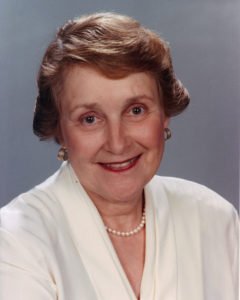 Sandra (Sandy) Friedman Dolnick (1936-2016), a Milwaukee native, became an extraordinarily effective advocate for libraries during the last quarter of the 20th century. Her efforts started out unassumingly as a member of the Friends of the Whitefish Bay Public Library. She was actively involved in the Friends of Wisconsin Libraries (FOWL) which was founded on April 21, 1963. FOWL was dedicated to promoting the formation of local chapters in support of local libraries and to working on the state level to improve statewide library services. FOWL later merged with the Wisconsin Library Association Trustees Division to form the Library Trustees & Friends Division. Building on the friends of libraries experience in Wisconsin Dolnick proposed in 1975 the idea of uniting library friends groups throughout the United States with the publication of a newsletter to share best practices. At that time, she served on a Friends Committee within the Library Leadership and Management Association of the American Library Association (ALA). With the assistance of ALA, she subsequently surveyed all known library friends groups in the U.S. Her newsletter became so successful that it led to the founding of Friends of Libraries USA (FOLUSA) in 1979. Dolnick served as the executive director of FOLUSA for 23 years, during which time she established strong partnerships with publishers and corporate sponsors. She retired as executive director in 2002. In 2009 FOLUSA merged with the American Library Association and became United for Libraries: Association of Trustees, Advocates, Friends and Foundations. Dolnick was also a member of the Milwaukee Booksellers, now the Friends of the Milwaukee Public Library, and served as its president.
 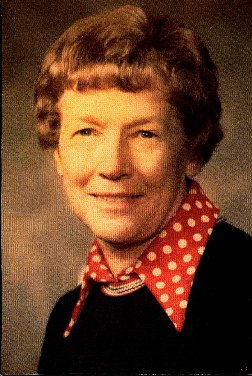 Ruby Roeder was inducted into the Wisconsin Library Hall of Fame at the Wisconsin Library Association annual meeting in Wisconsin Dells on October 19, 2017.
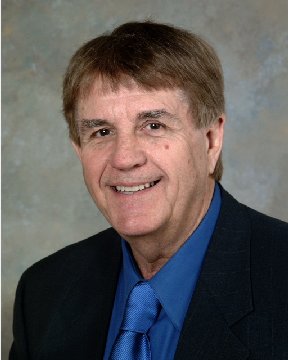 John (Joe) J. Jax made major contributions to academic librarianship in Wisconsin and to the Wisconsin Library Association (WLA). As Director of the Library Learning Center and Associate Professor at the University of Wisconsin – Stout for 32 years he was a leader on campus, in the academic community, and in WLA. He put the library at UW-Stout at the forefront of new technology, was a strong voice for the UW System, and a major player in the development of library cooperation and resource sharing both within the academic world and across all types of libraries.
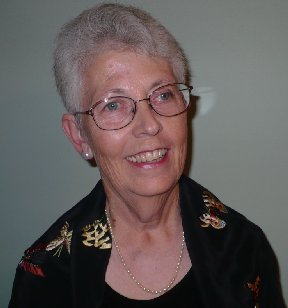 Louise S. Robbins has been a force in and for Wisconsin libraries since she became Assistant Professor and Faculty Administrator at the UW-Madison School of Library and Information Studies in 1991. She joined SLIS after being a reading specialist, teacher, and librarian in Oklahoma where she also served as Ada, Oklahoma’s first woman council member and then mayor. Her work in Oklahoma resulted in being named an
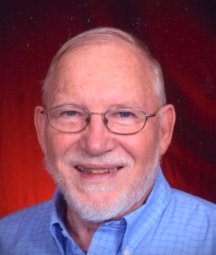 Larry T. Nix joined the Bureau of Public and Cooperative Library Services in the Wisconsin Department of Public Instruction in 1980 as a public library administration and buildings consultant. He became director of the bureau which later became the Public Library Development Team in 1983. He served in that capacity until his retirement in 2003. In 1996-1997, he also served as the Assistant State Superintendent for the Division for Libraries, Technology, and Community Learning in DPI. As director of the Public Library Development Team he oversaw the administration of the Federal Library Services and Technology Act, the state public library system aid program, and the public library certification program. He was involved in every aspect state level public library policy development in Wisconsin during this period. This included providing leadership for the development of Wisconsin public library standards and for significant improvements in Wisconsin public library law. During his tenure on the Public Library Development Team he was a strong advocate for public library funding, library service to children, library services to special needs populations, and multi-type library cooperation.